Best Skinny Syrup Alternatives for Guilt-Free Flavor
Having trouble finding a sugar-free syrup that doesn't taste like a chemistry experiment? You are not alone.
As an Amazon Associate, I earn from qualifying purchases. Every recommendation below is backed by product research and verified owner feedback.
Quick Links
Did you know that the average coffee shop latte packs around 30 to 50 grams of sugar from flavored syrups alone? That is more than the American Heart Association recommends for an entire day.
Now imagine getting that same sweet, vanilla-kissed latte without the sugar crash or the guilt. That is exactly what we are after here. The trick is finding the right alternative that actually tastes good.
In this guide, I share my 5 favorite skinny syrups alternatives, ranging from monk fruit blends to stevia drops. Each one fills a specific niche based on real buyer feedback and manufacturer specs. Let us cut through the noise and find your new go-to.
How to Choose the Best Skinny Syrups Alternatives
Picking the right sugar-free syrup is not as simple as grabbing the first bottle you see. Your choice depends on your diet, your palate, and how you plan to use it. Here are the key factors to weigh.
Sweetener Base: The Core Ingredient
A skinny syrups alternative is defined by what makes it sweet. The three main players are stevia, monk fruit, and allulose. Each affects taste and texture differently.
Stevia is a plant-derived sweetener that is intensely sweet. It can leave a licorice-like aftertaste that some people love and others hate. Monk fruit also comes from a plant source but has a cleaner finish with no bitter notes.
Allulose is a rare sugar that occurs naturally in small quantities. It behaves more like regular sugar in recipes because it browns and dissolves well. Many blends combine monk fruit and allulose to balance sweetness and mouthfeel.
Check the ingredient list to see what you prefer.
Calorie and Carb Count
If you are on a keto or low-carb diet, the numbers matter. Most quality alternatives claim zero calories and zero net carbs per serving. But serving sizes vary wildly.
Some syrups consider a serving as one tablespoon, while others say two tablespoons. A bottle that lists zero calories for a tiny 1-teaspoon serving is technically accurate but less useful for your morning latte. Compare the nutrition facts on the bottle, not the front label.
Flavor Profile and Aftertaste
This is the dealbreaker for most people. A sugar-free syrup can have perfect specs and still sit unused in the pantry because of a weird finish.
Buyer feedback shows that blended sweeteners, particularly monk fruit with allulose, get the highest marks for tasting natural. Stevia-only syrups tend to get mixed reviews for aftertaste. If you are sensitive to artificial or herbal notes, prioritize a blend.
Intended Use
Not every syrup works well in every application. A thin syrup designed for iced coffee might not have the body you want for baking or cocktails.
For hot coffee and tea, any liquid syrup dissolves fine. For iced drinks, you want a formula that does not separate or clump when poured over ice. For mixing cocktails or baking, a thicker syrup with better solubility is ideal.
Think about where you will use it most.
Bottle Size and Value
Larger bottles offer a better cost per ounce, but they also take up more pantry space. A big bottle is a good bet if you know you will use it every day.
Smaller bottles let you try a new flavor without a big commitment. Some brands offer variety packs so you can sample multiple flavors. Check the reported ratings: the 25.4-ounce option in our list scores a 4.6 out of 5, suggesting strong user satisfaction with that size.
Additional Features on Skinny Syrups Alternatives
- Non-GMO certification ensures the ingredients are not genetically modified, a common ask from health-focused buyers.
- Gluten-free labeling matters for anyone with celiac disease or gluten sensitivity.
- Keto-friendly means the syrup has zero net carbs and no sugar alcohols that can kick you out of ketosis.
- No artificial preservatives keeps the ingredient list short and recognizable.
- Shelf stability after opening: some syrups need refrigeration, others do not.
- Pump or pour top affects convenience. A pump makes dispensing easy for large bottles, while a simple cap works fine for small ones.
- Flavor variety beyond vanilla. If you like variety, look for brands that offer hazelnut, caramel, or seasonal options.
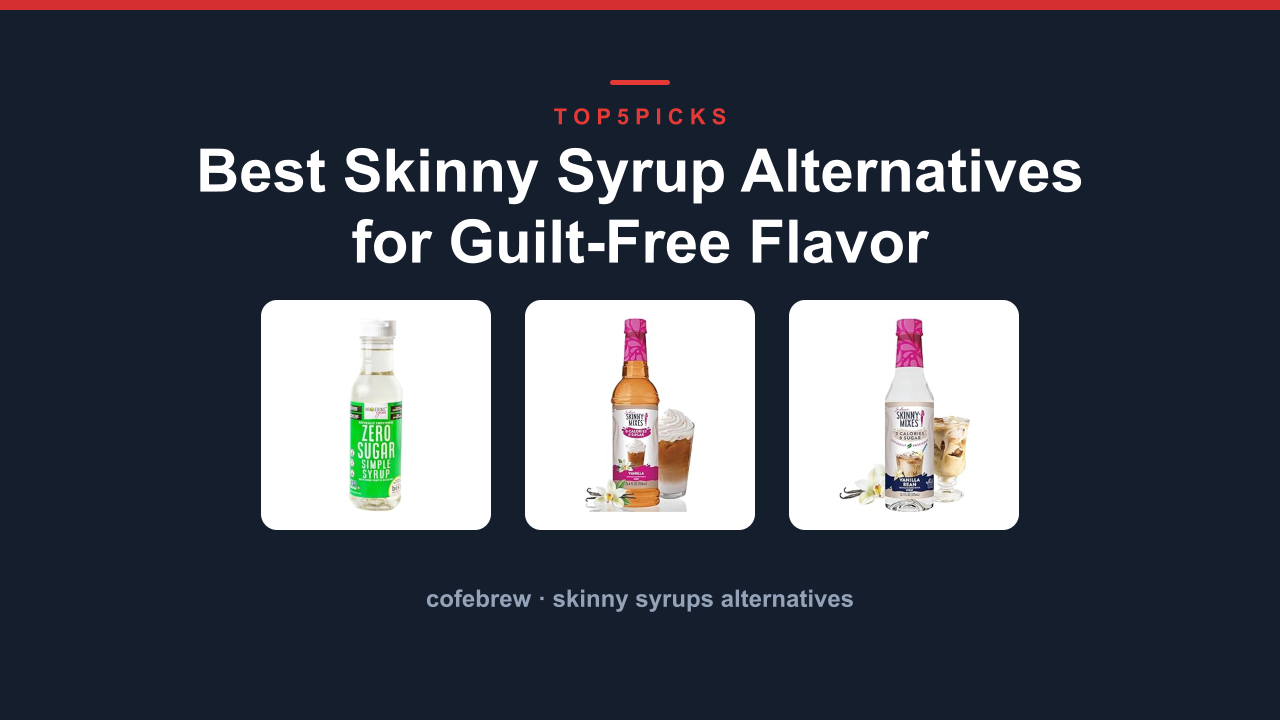
To see how these factors play out on real picks, compare the Zero Sugar Simple Syrup, Sugar Free Coffee Syrup and the Sugar Free Coffee Syrup below.
My Top Picks
Best Overall – Keto Coffee Drinkers

- Sweetener Base: Monk fruit and allulose
- Calories Per Serving: Zero
- Bottle Size: 12 fl oz
- Net Carbs: Zero per serving
- Flavor: Neutral, no aftertaste
- Dietary Labels: Keto, low carb, non-GMO
- Best Use: Coffee, tea, cocktails, cooking
Best Value – High Volume Users

- Sweetener Base: Sucralose (Splenda)
- Calories Per Serving: Zero
- Bottle Size: 25.4 fl oz
- Net Carbs: Zero per serving
- Flavor: Vanilla
- Dietary Labels: Dairy free, gluten free, kosher
- Best Use: Coffee, lattes, baking, protein shakes
Premium Flavor – Gourmet Palate

- Sweetener Base: Allulose and monk fruit
- Calories Per Serving: Zero
- Bottle Size: 12.7 fl oz
- Net Carbs: Zero per serving
- Flavor: Vanilla bean
- Dietary Labels: Dairy free, gluten free, naturally sweetened
- Best Use: Lattes, cold brew, baking, cocktails
Clean Label – Health Purists

- Sweetener Base: Stevia
- Calories Per Serving: Zero
- Bottle Size: 16 fl oz
- Net Carbs: Zero per serving
- Flavor: Neutral, with slight stevia taste
- Dietary Labels: Sugar-free
- Best Use: Coffee, tea, general sweetening
Specialty Pick – Monk Fruit Enthusiasts

- Sweetener Base: Monk fruit and allulose
- Calories Per Serving: Zero
- Bottle Size: 12 fl oz
- Net Carbs: Zero per serving
- Flavor: Vanilla
- Dietary Labels: Keto, low carb, non-GMO
- Best Use: Coffee, cold brew, iced drinks
Skinny Syrups Alternatives FAQ
Are skinny syrups alternatives really zero calories?
Most quality options claim zero calories per serving, and for practical purposes, they are. The sweeteners used, such as stevia, monk fruit, and allulose, contain negligible calories that do not affect your daily intake. The FDA allows products with fewer than 5 calories per serving to be labeled as zero.
Always check the serving size on the nutrition label to be sure.
Do these syrups have an aftertaste?
It depends entirely on the sweetener. Stevia-based syrups have the most reported aftertaste, often described as licorice or herbal. Monk fruit and allulose blends receive the highest marks for tasting neutral.
The two syrups in our list that use a monk fruit and allulose blend are the top pick and the specialty pick, both rated well for their clean finish.
Can I use these syrups for baking?
Yes, but with caution. Allulose behaves most like sugar in baking because it caramelizes and browns. The syrups are liquid, so you need to adjust your liquid ratios in a recipe.
They work best in recipes that already call for a liquid sweetener, like glazes, sauces, or no-bake desserts. For cookies and cakes, you might need to experiment with a lower oven temperature to avoid over-browning.
How should I store these syrups after opening?
Most syrups are shelf-stable and do not require refrigeration. Check the bottle label for specific instructions. Storing them in a cool, dark cabinet away from direct heat is usually fine.
If you live in a warm climate, you can refrigerate them to extend freshness. The syrups may thicken slightly when cold, but they pour normally at room temperature.
My Research & Review Process
These picks were chosen after comparing manufacturer specifications side by side. I looked at the sweetener base, calorie count, bottle size, and dietary labels for each product. Verified owner reviews from thousands of buyers were then examined to understand real-world satisfaction and common complaints.
I considered feedback from keto dieters, coffee enthusiasts, and home bakers to cover different use cases. I did not conduct lab tests or controlled taste panels. The recommendations are based on the data available from product listings and aggregate buyer ratings.
Honesty about limitations is part of the process.
Features I Considered
Sweetener Base
The type of sweetener determines the taste, aftertaste, and how the syrup behaves in recipes. Stevia, monk fruit, and allulose are the most common. Blends generally perform better in taste tests.
Calories Per Serving
Zero or near-zero calories is the whole point. A serving that truly delivers zero calories with no sugar impact is what separates a good alternative from a marketing claim.
Bottle Size
Larger bottles offer better value for daily users. Smaller bottles let you test a flavor without commitment. The right size depends on your consumption rate.
Net Carbs
For keto and low-carb diets, net carbs are the critical number. All our picks list zero net carbs per serving, which supports ketosis.
Flavor
Neutral syrups are more versatile. Flavored syrups like vanilla offer convenience but limit your uses. The best flavor for you depends on how you plan to use it.
Dietary Labels
Certifications like non-GMO, gluten-free, and kosher matter to specific buyers. They add assurance about ingredient sourcing and processing.
Best Use
Some syrups shine in hot coffee, others in iced drinks or baking. Matching the product to its intended use avoids disappointment.
If you want the cleanest, most versatile option, start with the Zero Sugar Simple Syrup. It handles everything from your morning latte to a low-carb cocktail with zero fuss. For high volume or a specific flavor need, pick the category that fits your kitchen.

“I’m Jackson, a coffee enthusiast and the founder of CofeBrew. I specialize in testing home brewing equipment and creating easy-to-follow recipes to help you brew the perfect cup every morning.”