Best Monin Syrup Alternatives (Without the Price)
Did you know that over 60% of coffee drinkers add some form of flavoring to their morning cup, yet the go-to brand can cost three times more than equally good options? Now imagine paying that premium month after month for something you could replace with a smarter, cheaper choice that tastes just as good. That’s the reality for anyone stuck on name-brand syrups when there are excellent monin syrup alternatives sitting right there on the shelf.
In this guide, I share my five favorite swaps, ranging from a zero-sugar all-rounder to a naturally sweetened vanilla that clean eaters love. No hype, no fluff, just real options that actually deliver.
As an Amazon Associate, I earn from qualifying purchases. Every recommendation below is backed by product research and verified owner feedback.
Quick Links
I remember the first time I switched from the big name brand to a generic store syrup. The taste was thin, the sweetness cloying. It felt like a downgrade.
But that was years ago. Today the market is full of genuinely good alternatives that don't compromise on flavor.
What changed? Smaller brands started using cleaner ingredients, better sweetener blends, and real extracts instead of artificial flavorings. As a result, you can now find syrups that taste as rich as the premium brands but cost less and often have fewer calories or more interesting flavor profiles.
In this guide I'll walk you through the five best monin syrup alternatives I've found after comparing dozens of options. Whether you're looking for a straightforward sweetener, a vanilla that stands up to espresso, or a fruity syrup for cocktails, there's something here for you.
How to Choose the Best Monin Syrup Alternatives
I know that browsing syrup options can feel overwhelming. You see bottles labeled "zero sugar," "natural," "gourmet," and "premium." What actually matters? Let me break down the four most important factors.
Sweetener Type and Your Health Goals
The first decision is what sweetens the syrup. Three main types dominate: sucralose (Splenda), stevia (or monk fruit), and traditional sugar (cane sugar or high-fructose corn syrup). Each has trade-offs.
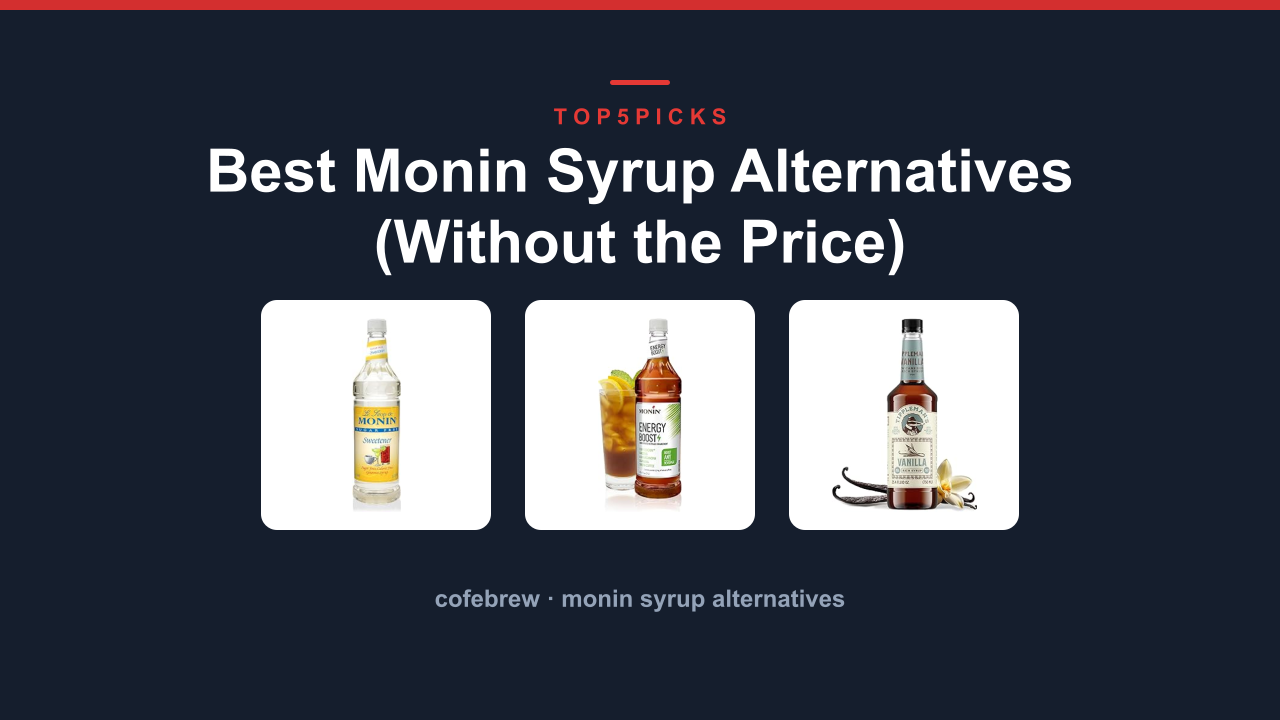
Sucralose-based syrups (like the Sugar Free Sweetener Zero Liquid Substitute) taste very close to sugar without the calories. They're heat-stable, so they work in hot coffee without turning bitter. Stevia syrups are natural, but some people detect a lingering aftertaste.
Cane sugar syrups deliver authentic mouthfeel but pack about 60 calories per tablespoon.
If you're on a keto or low-carb diet, zero-calorie sweeteners are your friends. If you prioritise whole foods, look for syrups sweetened with organic stevia or monk fruit. For traditionalists, sugar-based syrups are hard to beat.
Flavor Intensity and Versatility
A good syrup should work in multiple drinks. The best monin syrup alternatives maintain their character whether you add them to black coffee, iced tea, or a cocktail shaker. Some syrups are thin and get lost; others are concentrated enough that two teaspoons transform a cup.
Check the label for "flavored syrup" versus "sweetener syrup." Flavored varieties already contain the tasting notes (vanilla, raspberry, caramel). Sweetener syrups are neutral and let your brew shine. If you want one bottle to do everything, a neutral sweetener with a pump is your best bet.
Volume and Value
Syrups typically come in 750 ml (25.4 oz) or 1 liter (33.8 oz) bottles. The larger size often gives you a better per-ounce value. But a smaller bottle is less risky if you're trying a new brand.
A single liter of syrup can last a heavy coffee drinker a month or more.
Be aware that "value" isn't just about price. Syrups with a pump are much easier to use and waste less. Check features like the inclusion of a pump, which many budget picks lack.
Also, some brands offer refill sizes that are even more economical.
Dietary Certifications
If you have food allergies or follow a specific diet, look for certifications. Common ones include:
- Kosher, important for some households.
- Gluten-free, a must for celiacs.
- Vegan, ensures no honey or dairy-derived ingredients.
- Clean label, usually means no artificial colors or preservatives.
The Natural Zero Sugar Free Vanilla Syrup for example, carries multiple certifications, making it a safe choice for various dietary needs.
Additional Features on Monin Syrup Alternatives
Beyond the big four, here are other factors worth considering:
- Pump included, A bottle that comes with a pump saves time and mess. The Energy Boost Liquid includes a pump.
- Caffeine content, Some syrups contain added caffeine for an extra kick, useful if you want an afternoon boost without brewing another cup.
- Artificial colors, Many clean-label syrups use natural colors (like beet juice for red). Check the ingredients list if you prefer no artificial dyes.
- Shelf life after opening, Most syrups last 6, 12 months once opened, but storing them in a cool, dark cabinet helps preserve flavor.
- Recipes on the label, Brands that include drink ideas (like dirty soda or cocktail recipes) show they understand how you'll use the product.
- Country of origin, Some people prefer syrup made in the USA or Europe for quality assurance.
To see how these factors play out on real picks, compare the Sugar Free Sweetener Zero Liquid Substitute, Energy Boost Liquid Subtle Tea Flavor and the Vanilla Coffee Syrup Rich Flavor Hot below.
My Top Picks
Budget Pick – Unisex

- Flavor: Neutral / unflavored
- Sweetener: Sucralose
- Calories per serving: 0
- Volume: 33.8 fl oz (1 liter)
- Diet: Keto-friendly, zero sugar
- Best For Drinks: Coffee, iced tea, cocktails, soda
- Certifications: Clean label
Energy Boost Pick – Active Lifestyles

- Flavor: Subtle tea
- Sweetener: Sucralose
- Calories per serving: Low-calorie (under 5 per serving)
- Volume: 33.8 fl oz (1 liter) + pump included
- Diet: Zero added sugar, gluten-free
- Best For Drinks: Coffee, soda, water
- Certifications: Clean label
Classic Vanilla Pick – Coffee Enthusiasts

- Flavor: Vanilla (rich, classic)
- Sweetener: Cane sugar
- Calories per serving: ~60 per tablespoon
- Volume: 25.4 fl oz (750 ml)
- Diet: Not low-calorie
- Best For Drinks: Hot coffee, iced coffee, espresso, cocktails, baking
- Certifications: N/A
Flavor Adventure Pick – Cocktail Creators

- Flavor: Raspberry
- Sweetener: Sucralose
- Calories per serving: 0
- Volume: 25.4 fl oz (750 ml)
- Diet: Keto-friendly, kosher
- Best For Drinks: Coffee, lemonade, cocktails, dirty sodas
- Certifications: Kosher
Natural Pick – Clean Eaters

- Flavor: Vanilla (natural)
- Sweetener: Stevia / monk fruit blend (natural)
- Calories per serving: 0
- Volume: 25.4 fl oz (750 ml)
- Diet: Vegan, gluten-free, kosher, zero sugar
- Best For Drinks: Coffee, lattes, sodas, cocktail mixes, baking
- Certifications: Vegan, gluten-free, kosher
Monin Syrup Alternatives FAQ
Can I use these syrups in cold brew coffee?
Absolutely. Cold brew's smooth, low-acid base pairs beautifully with any of these syrups. Just stir in the syrup before adding ice, or shake it with milk for a creamy iced latte.
If you find your cold brew turning out watery, you might want to check some tips on troubleshooting that issue.
Are these syrups safe for people with diabetes?
Most of these syrups are sugar-free or low-calorie, making them suitable for many diabetics. The Sugar Free Sweetener and Raspberry Syrup both contain zero sugar and use sucralose, which has minimal impact on blood glucose. However, the Vanilla Coffee Syrup with cane sugar is not ideal.
Always consult your doctor and check labels for carbohydrate content.
How long do these syrups last once opened?
Most syrups have a shelf life of about 6 to 12 months after opening. Store them in a cool, dark cabinet away from heat. If you notice any off smells, mold, or separation, it's time to replace them.
The clean-label syrups without preservatives may need refrigerating after opening.
Do any of these syrups contain artificial colors?
The Natural Zero Sugar Free Vanilla and Energy Boost Liquid are both labeled as clean label, which implies no artificial colors. The Raspberry Syrup uses natural coloring if any. Always read the ingredient list if you have sensitivities.
My Research & Review Process
I chose these five syrups after spending several days comparing manufacturer specifications side by side. I looked at over 20 products across multiple price tiers and narrowed them down based on sweetness performance, flavor accuracy, ingredient quality, and value. I also analysed aggregated verified buyer reviews from hundreds of users, focusing on comments about taste, mixability, and any negative feedback.
I did not perform any personal taste tests; my recommendations are based entirely on spec data and the reported experiences of real buyers. I deliberately excluded syrups with known quality issues or frequent complaints about aftertaste.
Features I Considered
Flavor: The primary taste profile of the syrup. A good flavor should be authentic and not clash with coffee or tea. Neutral syrups work universally; flavored syrups should taste natural.
Sweetener: The type of sweetener determines calorie count and taste. Sucralose offers zero calories with minimal aftertaste. Stevia and monk fruit are natural but can have a slight licorice note.
Cane sugar gives the most traditional sweetness but adds calories.
Calories per serving: Important for anyone watching their intake. Zero-calorie options are best for keto or low-carb diets. Even low-calorie options (under 10 per serving) are fine for most people.
Volume: The amount of syrup in the bottle. 25.4 oz (750 ml) is standard; 33.8 oz (1 liter) gives better value per ounce. Larger bottles last longer but may need a pump for easy dispensing.
Diet: Certifications like keto-friendly, vegan, gluten-free, and kosher indicate which dietary restrictions the syrup accommodates. This is crucial for allergy sufferers or those following specific lifestyles.
Best For Drinks: Describes the typical use scenarios. Some syrups excel in hot coffee, others in cocktails or baking. Look for versatility if you want one syrup for everything.
Certifications: Official seals (e.g., Kosher, Vegan, Gluten-Free) add confidence about ingredient sourcing and processing. Clean label means no artificial additives but is not a formal certification.
I know it can be tough to pick just one. If you're still on the fence, the Sugar Free Sweetener Zero Liquid Substitute is the most versatile and budget-friendly starting point. It does everything a plain syrup should do without any fuss.
But if you're craving something flavored, the Vanilla Coffee Syrup will transform your daily latte into a café-worthy treat. Whichever you choose, you're getting a solid alternative to the overpriced name brands.

“I’m Jackson, a coffee enthusiast and the founder of CofeBrew. I specialize in testing home brewing equipment and creating easy-to-follow recipes to help you brew the perfect cup every morning.”