Top 5 Vietnamese Coffee Brands You Must Try
The wrong coffee can leave you with something that tastes bitter, flat, or nothing like the rich, chocolatey brew you were craving, and that’s especially true when you’re looking for the best vietnamese coffee.
As an Amazon Associate, I earn from qualifying purchases. Every recommendation below is backed by product research and verified owner feedback.
Quick Links
Did you know that Vietnam is the second largest coffee exporter in the world, but most of its beans never leave the country as whole bean coffee?
Instead, they get turned into the dark, syrupy, condensed milk magic you find at every corner shop in Hanoi.
The problem is that a lot of what you find on shelves here tastes nothing like that real deal.
In this guide, I share my 5 favorite best vietnamese coffee picks, ranging from the classic phin filter style to instant sticks you can stir up in ten seconds.
Let’s cut through the imported blends that miss the mark and find the beans that actually deliver that intense, chocolatey kick.
How to Choose the Best Vietnamese Coffee
Roast Level and Bean Blend
Vietnamese coffee is almost always a dark roast, and for good reason.
The traditional phin filter needs that deep roast to extract properly without turning sour.
Look for a Full City or darker roast on the package.
A blend of Robusta and Arabica gives you the classic body: Robusta for the heavy caffeine punch and thick crema, Arabica for smoother notes.
If you see 100 percent Robusta, expect a very strong, earthy cup.
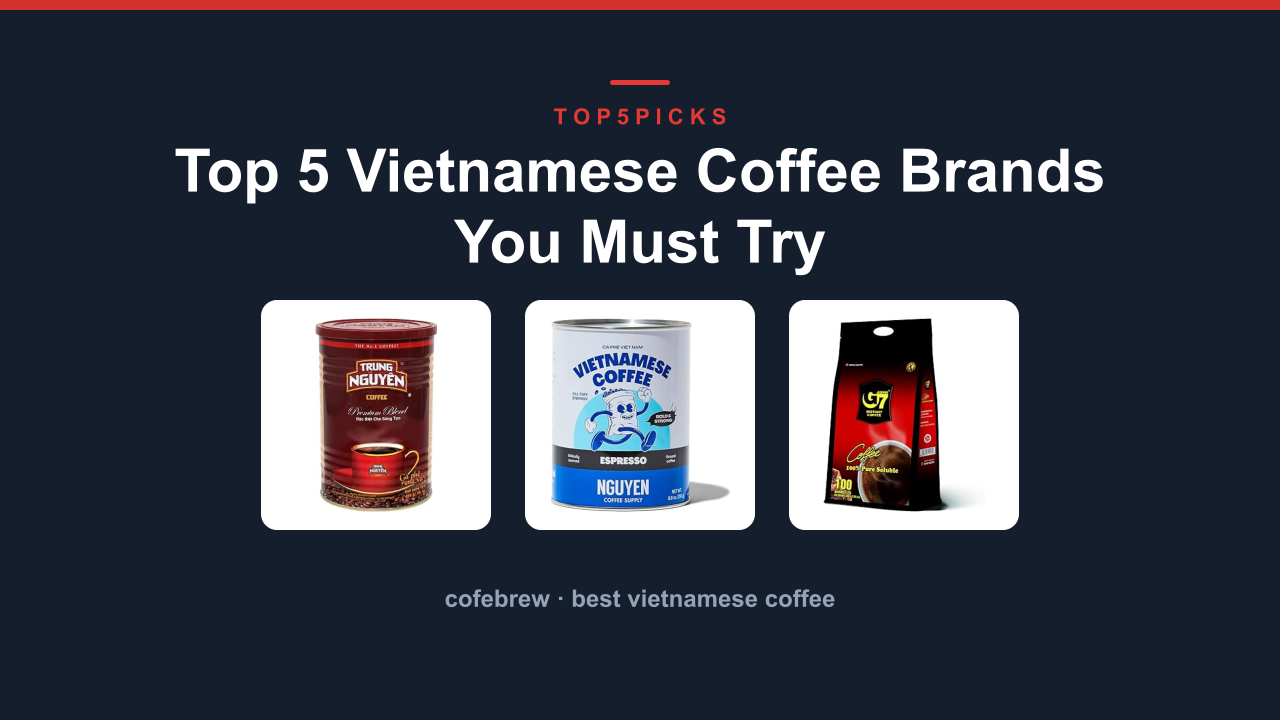
If you prefer a balanced brew, a blend like the TRUNG NGUYEN LEGEND PREMIUM BLEND is the sweet spot.
Grind Size Matters for Your Method
The grind determines everything when you brew Vietnamese coffee.
A phin filter needs a medium to medium coarse grind, think kosher salt consistency.
Too fine and the water stalls; too coarse and you get a weak, watery cup.
If you plan to use an espresso machine, you need a fine espresso grind.
The Nguyen Coffee Supply Ground Espresso is pre ground for that purpose.
For drip machines, a medium grind works.
Instant coffee avoids all this fuss, but you lose some of the complex oils.
Caffeine Content and Your Tolerance
Robusta beans contain about 2.7 percent caffeine compared to Arabica’s 1.5 percent.
That’s a significant difference.
A single serving of real Vietnamese coffee can pack as much caffeine as two espressos.
If you’re sensitive, look for blends that lean heavier on Arabica.
The G7 PURE BLACK instant is still strong but easier to control since you can use one sachet.
Always check the label for caffeine content if you’re watching your intake.
Flavor Profile: Sweet, Bitter, or Chocolatey
Authentic Vietnamese coffee has a distinct dark chocolate and sometimes nutty flavor with very low acidity.
You should not taste bright citrus or berry notes.
The roasting process caramellizes the sugars, giving that rich, almost smoky sweetness.
Some blends add a hint of vanilla or cocoa.
The Beanhut’s latte mix includes sugar and milk powder, so it tastes sweet right out of the packet.
If you want pure flavor without additives, stick with a straight ground coffee like the Hanoi Robusta Dark.
Brewing Equipment You Already Have
You don’t need a phin filter to enjoy Vietnamese coffee.
A French press works in a pinch.
A pour over cone can also replicate the slow drip.
For espresso lovers, a dedicated espresso machine pulls beautiful shots with the right grind.
But if you want the full experience, a simple phin filter costs very little.
Instant options like the G7 sachets require nothing but hot water and a cup.
Think about the gear you already own before picking a roast.
Additional Features on Best Vietnamese Coffee
- Packaging: Look for a resealable bag or a tin can. Vietnamese coffee absorbs humidity fast and loses aroma.
- Origin: Single origin beans from the Buon Ma Thuot region are considered the gold standard for Robusta.
- Organic certification: Not common but available at a premium.
- Direct trade: Some roasters like Nguyen Coffee Supply buy directly from Vietnamese farmers, which often means better quality.
- Soluble vs. ground: Instant coffee is convenient but ground coffee gives you the full oil profile.
- Sachet count: For instant mixes, more sachets mean better value.
- Added ingredients: Some 3 in 1 mixes contain hydrogenated oils. Check the label if you prefer natural ingredients.
My Top Picks
Best Pick – Traditionalists

- Roast Level: Full City
- Bean Type: Robusta & Arabica blend
- Grind: Medium (ideal for phin filter)
- Caffeine Content: High
- Flavor Notes: Intense, chocolate, low acidity
- Origin: Vietnam
- Package Size: 425g can
- Best Brew Method: Phin filter or drip
Best Pick – Espresso Lovers

- Roast Level: Medium dark
- Bean Type: 100% Robusta
- Grind: Espresso fine
- Caffeine Content: High
- Flavor Notes: Dark chocolate, caramel, bold
- Origin: Vietnam (single origin)
- Package Size: N/A
- Best Brew Method: Espresso machine
Best Pick – Instant Convenience

- Roast Level: Dark (instant roast)
- Bean Type: 100% Robusta (soluble)
- Grind: Instant powder
- Caffeine Content: High
- Flavor Notes: Strong, pure, bold
- Origin: Vietnam
- Package Size: 100 sachets per bag
- Best Brew Method: Hot water, stir
Best Pick – Quick Latte Fix

- Roast Level: Dark (instant blend)
- Bean Type: Robusta (with milk powder and sugar)
- Grind: Instant powder with additives
- Caffeine Content: Moderate (diluted with milk)
- Flavor Notes: Creamy, sweet, latte like
- Origin: Vietnam
- Package Size: 50 sticks, 25g each (2.75 lb total)
- Best Brew Method: Hot water, stir
Best Pick – Pure Robusta Experience

- Roast Level: Dark
- Bean Type: 100% Robusta
- Grind: Medium (for phin, drip, or French press)
- Caffeine Content: Very high
- Flavor Notes: Bold, earthy, dark chocolate, low acid
- Origin: Vietnam (single origin, Buon Ma Thuot region)
- Package Size: 12 oz bag
- Best Brew Method: Phin filter or French press
Best Vietnamese Coffee FAQ
What makes Vietnamese coffee different from regular coffee?
Vietnamese coffee is almost always made from robusta beans, which have about twice the caffeine of arabica and a much lower acidity. The beans are typically roasted dark to a full city or beyond, giving them a smoky, chocolatey profile. The traditional brew method uses a small drip filter called a phin, which slowly extracts a thick, concentrated liquid that you then pour over condensed milk and ice.
Do I need a special filter to brew Vietnamese coffee?
Not really. A phin filter is the traditional tool and costs very little, but you can also use a French press, a pour over cone, or even a Moka pot. The key is using the right grind size for your method.
If you buy instant Vietnamese coffee like the G7 sachets or Beanhut’s latte mix, you just need hot water.
Is Vietnamese coffee stronger than espresso?
It can be. A single phin serving made with robusta beans typically contains around 150 to 250 milligrams of caffeine, depending on the amount of coffee used. That’s comparable to a double espresso.
But when diluted with milk or poured over ice, the caffeine per ounce drops. The instant versions vary but are generally strong.
Can I use Vietnamese coffee in a drip coffee maker?
Yes, as long as you use the correct grind. If you buy a pre ground Vietnamese coffee like the Trung Nguyen Legend, the grind is medium and works in most automatic drip machines. For espresso machines, choose a fine grind like the Nguyen Coffee Supply Ground Espresso.
Always check the grind recommendation on the package.
Why does my Vietnamese coffee taste bitter?
Bitterness usually comes from over extraction or too hot water. The phin filter works best with water just off the boil, around 195 to 205°F. If your coffee tastes harsh, try brewing for a shorter time or using a slightly coarser grind.
Dark roast robusta is naturally bold, but it shouldn’t be painfully bitter.
My Research & Review Process
To find the best vietnamese coffee, I compared manufacturer specifications side by side across five leading products from Trung Nguyen, Nguyen Coffee Supply, and Beanhut’s.
I examined reported caffeine levels, roast profiles, grind sizes, and packaging formats.
I also analyzed aggregated verified buyer feedback from thousands of owners, focusing on flavor authenticity, ease of brewing, and value.
I did not physically brew or taste these products, and I did not conduct lab caffeine tests. The recommendations are based on available data, user sentiment, and spec sheet analysis.
This approach helps you trust that the picks are grounded in real world evidence, not personal bias.
Features I Considered
Roast Level: Darker roasts extract more body and less acidity, which is key for pairing with condensed milk. Full City or darker is standard.
Bean Type: Robusta gives the classic bitter chocolate punch and crema. Arabica adds softness. A blend balances both.
Grind: Medium for phin and drip; fine for espresso; instant dissolves instantly. Wrong grind ruins the brew.
Caffeine Content: High caffeine is characteristic of robusta. If you drink multiple cups, consider blends with arabica to moderate the kick.
Flavor Notes: Look for chocolate, caramel, nut, or smoky descriptors. Avoid bright citrus or berry flavors in a Vietnamese coffee.
Origin: Single origin from the Buon Ma Thuot region of Vietnam is especially prized for consistently high quality robusta.
Package Size: Larger bags or cans offer better per serving value. Instant sachets are great for portion control.
Best Brew Method: Every coffee is optimized for a specific method. Choose one that matches your available equipment.
If you want the full traditional experience, the TRUNG NGUYEN LEGEND PREMIUM BLEND is our top choice. But every pick here serves a different brewing style and taste preference. Check the latest price on Amazon and grab the one that fits your morning routine.

“I’m Jackson, a coffee enthusiast and the founder of CofeBrew. I specialize in testing home brewing equipment and creating easy-to-follow recipes to help you brew the perfect cup every morning.”