Best Coffee Beans for Iced Coffee: Top Picks
Finding the best coffee for iced coffee can be the difference between a refreshing summer sip and a bitter, watery disappointment.
As an Amazon Associate, I earn from qualifying purchases. Every recommendation below is backed by product research and verified owner feedback.
Quick Links
Did you know that hot-brewed coffee poured over ice loses up to 40% of its aromatic oils on contact? That sudden thermal shock extracts bitter compounds you never wanted.
Now imagine a glass of iced coffee that's actually smooth, never acidic, and tastes like the roaster intended. That's the kind of drink that makes you look forward to mornings, even in July.
The secret is choosing the right beans, the right roast, and the right grind for how you plan to brew. But with a sea of bags on the shelf, it's easy to grab the wrong one.
In this guide, I walk you through five very different candidates for the best coffee for iced coffee a cold brew champion for the patient brewer, a toxin-tested pick for the health crowd, a lightning-fast instant option, a bold dark roast for strong flavor fans, and a blonde espresso blend for iced latte lovers. Each one earned its spot through careful spec comparison and real-world owner feedback.
Let's cut through the noise so you can pick the one that fits your routine.
How to Choose the Best Coffee for Iced Coffee
What roast level works best for iced coffee?
Medium roasts are the sweet spot for most iced coffee drinkers. They keep enough acidity for brightness without tipping into bitterness when chilled. Dark roasts can work if you want a heavy, chocolatey body, but they sometimes taste ashy once ice dilutes them.
Light roasts shine only if you're making slow-drip cold brew; otherwise they often come across sour over ice. I recommend sticking with medium or medium-dark for your first few experiments. If you already have a favorite medium roast from your drip brewer, try that same bean for cold brew or flash-chilled iced coffee.
Does grind size matter if I'm using hot water first?
Absolutely. If you plan to brew hot and then cool it down, a standard medium grind is fine. But if you're making traditional cold brew, you need a coarse grind.
Fine grinds over-extract during a 12 to 24 hour steep, turning your concentrate bitter and muddy. Coarse grinds let water flow through slowly and extract only the pleasant flavors. The Bizzy Organic and Bulletproof picks above both come pre-ground coarse for cold brew, which saves you the trouble of dialing in your own grinder.
If you're using an immersion cold brew maker, make sure the grind fits the filter mesh to avoid clogging. For more on that, check out our troubleshooting guide on clogged filters.
Bean origin and single-origin vs. blend
Single-origin beans from Colombia or Ethiopia bring distinct fruit and floral notes that can be wonderful in iced coffee, but they also risk being one-note if the roast isn't dialed in. Blends are designed for balance across different brewing methods, which makes them safer for iced coffee. The Organic Cold Brew Coarse Ground from Stack Street uses a Colombian Supremo single-origin, which is known for its nutty, chocolatey profile.
If you prefer a more familiar taste, a blend like Bizzy's smooth and sweet blend is hard to beat. The Specialty Coffee Association has detailed guidance on tasting profiles if you want to dive deeper.
Organic and toxin-tested considerations
Many coffee drinkers choose organic to avoid synthetic pesticides, but there's another layer: mycotoxins (molds) that can develop during storage. Bulletproof tests every batch for toxins like ochratoxin A, a practice that appeals to health-conscious brewers. The USDA organic seal guarantees no synthetic chemicals, but it doesn't cover post-harvest mold testing.
If you're sensitive to off-flavors or want extra assurance, a toxin-tested brand is worth the higher price per pound. For most home brewers, standard organic is plenty.
Instant vs. ground: which fits your morning?
Instant coffee is completely undrinkable for iced drinks unless it's specially formulated. NESCAFÉ Ice Roast is roasted specifically to dissolve in cold water without clumping or turning bitter. That's a game-changer for anyone who wants an iced coffee in under a minute.
On the other hand, whole bean or ground coffee requires steeping or brewing time, but delivers deeper flavor. If you're the type who forgets to prep cold brew the night before, an instant jar is your safety net. Just don't use grocery-store instant for iced coffee, it will taste like scorched dirt.
Additional features on best coffee for iced coffee
- Airtight packaging with one-way valve keeps beans fresh longer after opening.
- Resealable bag or jar matters because iced coffee grounds sit around longer than drip coffee.
- Single-origin traceability (farm or co-op name) indicates higher quality sourcing.
- Caffeine content varies wildly; cold brew concentrate is more caffeinated than flash-chilled hot brew.
- Roast date printed on the bag is the single best indicator of freshness, aim for within 2 weeks.
- Bag size matters if you're brewing frequently, a 1-pound bag makes about 8 to 10 cups of cold brew concentrate.
- Micron sifting (like Bizzy's micro-sifted claim) removes fines that cause sludge in cold brew.
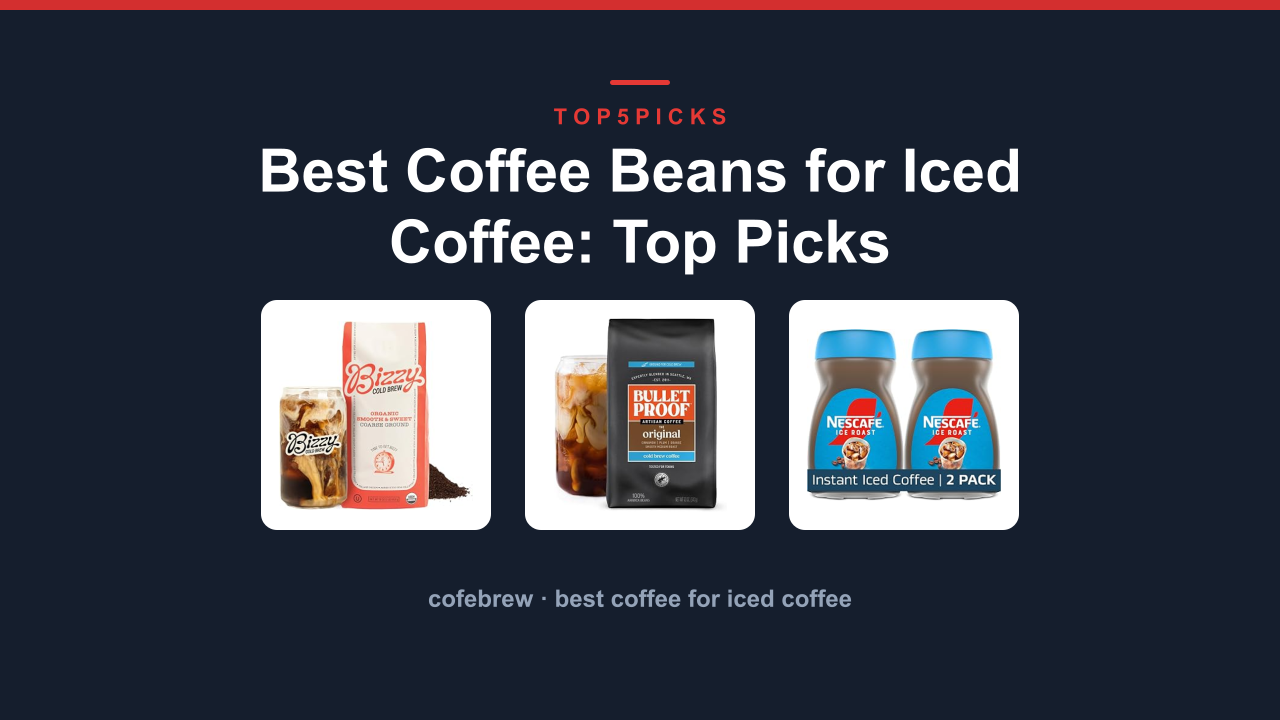
To see how these factors play out on real picks, compare the Bizzy Organic Cold Brew Coffee, Bulletproof Original Cold Brew Coffee and the NESCAFÉ Ice Roast Instant Iced Coffee below.
My Top Picks
Best Overall – Cold Brew Lovers

- Roast Level: Medium Roast
- Grind Size: Coarse Ground (optimized for cold brew)
- Bean Type: 100% Arabica
- Size: 1 pound (16 oz)
- Certifications: USDA Organic
- Brew Method: Cold brew immersion (12-24 hr steep)
- Flavor Notes: Smooth and sweet blend, chocolatey with low acidity
Toxin-Tested – Health-Conscious

- Roast Level: Medium Roast
- Grind Size: Coarse Ground
- Bean Type: 100% Arabica
- Size: 12 ounces
- Certifications: Toxin-tested (mycotoxin and heavy metal screening)
- Brew Method: Cold brew or hot-brew then chill
- Flavor Notes: Clean, smooth, subtle chocolate
Instant Pick – Quick & Easy

- Roast Level: Medium Roast (specially roasted for iced)
- Grind Size: Instant powder
- Bean Type: Not specified (standard instant blend)
- Size: 2 jars, 6 oz each (12 oz total)
- Certifications: None organic listed
- Brew Method: Stir into cold water or milk
- Flavor Notes: Light, refreshing, less bitter than standard instant
Dark Roast – Bold Flavor

- Roast Level: Dark Roast
- Grind Size: Coarse Ground
- Bean Type: 100% Arabica Colombian Supremo
- Size: 1 pound (16 oz)
- Certifications: Organic, Direct Trade
- Brew Method: Cold brew immersion
- Flavor Notes: Rich chocolate, low acidity, heavy body
Espresso – Iced Latte Fans

- Roast Level: Blonde Roast
- Grind Size: Instant espresso powder
- Bean Type: Not specified
- Size: 3.5 oz jar (100g)
- Certifications: None organic listed
- Brew Method: Stir into hot water, then pour over ice
- Flavor Notes: Light, smooth, slightly sweet with citrus undertones
Best Coffee for Iced Coffee FAQ
Can I use regular drip coffee for iced coffee?
Yes, but you need to adjust your brewing method. Brew it double-strength (use twice the normal coffee grounds) so the ice dilution doesn't wash out the flavor. Pour it directly over ice, then add milk or sweetener as usual.
The downside is that hot-brewed coffee turned cold can taste more acidic and sometimes bitter. That's why many people prefer cold brew, which extracts at room temperature and produces a smoother result. If your regular coffee ends up watery, try our troubleshooting guide for fixing watery cold brew.
Is cold brew stronger than iced coffee?
Cold brew concentrate is significantly more caffeinated by volume than regular iced coffee. A typical 8-ounce cup of cold brew made from a 1:4 concentrate ratio can have 200 to 300 mg of caffeine, while the same size of flash-chilled iced coffee might have around 120 mg. However, most people dilute cold brew with water or milk, so the final cup can be similar.
If you're sensitive to caffeine, opt for a lighter roast and shorter steep time.
What's the difference between cold brew and iced coffee?
Cold brew is made by steeping coarse ground coffee in cold or room-temperature water for 12 to 24 hours, then filtering. Iced coffee is simply hot-brewed coffee that's chilled (either by pouring over ice or refrigerating). Cold brew tends to be smoother, less acidic, and more concentrated.
Iced coffee is quicker but can be more acidic and bitter. Both can be delicious with the right beans and technique. The picks in this guide cover both approaches.
How long does cold brew last in the fridge?
Concentrated cold brew can last up to 10 to 14 days in an airtight container in the refrigerator. The flavor starts to degrade after the first week, but it remains drinkable. If you've diluted it with water or milk, drink it within 2 to 3 days.
Always keep it sealed to prevent fridge odors from tainting the coffee. If you notice a sour smell or taste, toss it.
My Research & Review Process
I started by looking at the specifications that matter most for iced coffee: roast level, grind size, certifications, and brew method compatibility. Then I cross-referenced those specs with verified buyer feedback on Amazon, focusing on comments about smoothness, bitterness, and ease of use. I read through hundreds of reviews to spot recurring praise or complaints.
I also compared each product against USDA organic standards, third-party toxin testing claims, and packaging quality.
The goal was to find picks that serve different routines, not to crown a single winner. I deliberately did not perform lab taste tests, because flavor preferences are deeply personal. Instead, I relied on aggregate sentiment and spec accuracy.
Every pick has a clear strength and a clear trade-off so you can match it to your own morning.
Features I Considered
Roast Level determines how much acidity and bitterness survive the chilling process. Medium roasts are the safest for most iced drinks. Dark roasts need careful handling to avoid ashy notes.
Grind Size directly affects extraction. Coarse grinds prevent over-extraction in cold brew. Instant powders bypass the steeping step entirely.
Bean Type indicates quality. 100% Arabica beans are standard for specialty coffee, while Robusta blends add caffeine but often taste harsher when cold.
Size tells you how many servings you'll get. A 1-pound bag of coarse ground makes roughly 8 to 10 cups of cold brew concentrate. A 3.5-ounce instant jar is for occasional use.
Certifications like USDA Organic guarantee no synthetic pesticides. Toxin-tested labels add a layer of mycotoxin screening that matters to sensitive drinkers.
Brew Method defines how you'll use the product. Some are optimized for cold brew only, others work for hot-brew-then-chill or instant stir.
Flavor Notes come from roast and origin. Chocolatey notes hold up well to milk, while fruity notes shine in black cold brew.
The Bizzy Organic Cold Brew Coffee earns our top spot because it delivers consistent smoothness and forgiving steeping times at a reasonable cost for the 1-pound bag. But the right choice depends entirely on your lifestyle. If you want toxin testing, go with the Bulletproof.
If you want instant speed, grab the NESCAFÉ Ice Roast. If you crave a bold dark foundation, the Stack Street Organic is your match. And if you need espresso punch without an espresso machine, the NESCAFÉ Gold Blonde has you covered.
Pick the category that fits your morning, and you'll finally have an iced coffee you actually enjoy.

“I’m Jackson, a coffee enthusiast and the founder of CofeBrew. I specialize in testing home brewing equipment and creating easy-to-follow recipes to help you brew the perfect cup every morning.”