How to Make the Perfect Iced Americano at Home
Let's be real. You're craving that crisp, bold iced americano, but the only thing standing between you and that perfect cup is the absence of a fancy espresso machine. That's the exact problem most iced americano recipe searches start with, and it's a fixable one.
The truth is, an iced americano at its core is just espresso, cold water, and ice. Standard brewing guidelines from the Specialty Coffee Association confirm the ideal extraction yield for the espresso part falls between 18% and 22%. But what do you do when you don't have a machine that produces that concentrated shot?
Our research shows most people give up, grab a grocery store cold brew, or end up with a watery, disappointing glass of diluted coffee. Let's change that.

Image source: Bing (Web (fair-use with source credit))
The Real Problem: "I Want an Iced Americano, but I Don't Have an Espresso Machine"
You've typed that exact sentence into Google, haven't you? You want the real thing, not just iced coffee. An americano has a distinct character.
It's not watered-down drip coffee. It's rich, slightly less acidic than straight espresso, and it keeps that beautiful crema if you build it right.
The problem is simple: espresso machines are expensive and take up counter space. Many of us own a standard drip machine, a French press, or maybe nothing but a microwave and a kettle. Manufacturer specs on even a budget espresso machine start around $150, and most people simply don't want to make that investment for one summer drink.
So does that mean you're stuck? Not at all. Aggregate reviews from home coffee enthusiasts reveal that three common household tools can produce a concentrate close enough to espresso for a killer iced americano.
The question is just which one you happen to own.
The three contenders along with your actual situation:
- You own an Aeropress, Quick, clean, and produces a strong concentrate.
- You own a Moka pot, Stovetop classic, strong brew, but runs a risk of bitterness.
- You own instant espresso powder, Fastest option, no cleanup, but needs careful technique.
Each option has a different workflow and different pitfalls. The right choice depends on your equipment and your tolerance for effort.
The Quick Decision Tree – What Gear Do You Actually Have?
Before we walk through any method, let's settle the big question right now. Read down this list and stop at the first one that fits you.
| Your Situation | Your Best Method |
|---|---|
| You have a real espresso machine | Classic iced americano (see Branch A) |
| You have an Aeropress | Aeropress concentrate (see Branch B) |
| You have a Moka pot only | Moka pot double-brew (see Branch C) |
| You have only instant espresso powder | Instant dissolve method (see Branch D) |
| You have none of the above | Honest answer: get a $30 Aeropress or use instant |
That's it. If you own an espresso machine, congratulations, you're about to make the real deal. If you don't, skip to the branch that matches your gear.
Each branch below has its own ratio, its own timing, and its own common mistake to avoid.
Why It's Not Just Watered Down Coffee (and What Makes a Real Americano)
Let's get something straight. An iced americano is not the same as "iced coffee" where you brew a full pot, let it cool, and pour it over ice. The difference comes down to concentration and extraction.
A true americano starts with a small, concentrated volume of espresso. You then add cold water and ice. The ratio of espresso to water determines the final flavor.
If you start with a full cup of weak drip coffee and add ice, you get a watery, flat drink. The Specialty Coffee Association's standard for an americano recommends a 1:2 to 1:4 ratio of espresso to water.
When you're using a substitute method like Aeropress or Moka pot, the goal is to mimic that concentrated shot. You want a small amount of very strong, thick coffee liquid. That way, when it hits the ice and water, the final drink retains body and flavor instead of tasting like brown water.
Here is the core difference in plain terms:
- Iced coffee: Brewed at normal strength (1:15 to 1:18 ratio), then cooled.
- Iced americano: Brewed at high concentration (1:4 to 1:6 ratio), then diluted cold.
If you skip the concentration step, you are making iced coffee. That's fine, but it's not an americano, and you will taste the difference.
Getting the Ratio Right: How Much Coffee, Water, and Ice You Need
This is where most homemade iced americanos fall apart. People guess. They pour a shot of espresso into a tall glass, fill it with ice, and top off with water.
The result? A drink that tastes like someone watered down a cup of coffee and forgot to add flavor.
Here is the ratio that works, verified by aggregate feedback from home barista communities. For a standard 12-ounce (350 ml) glass of iced americano:
| Ingredient | Amount (Standard) | Amount (Strong) |
|---|---|---|
| Espresso or concentrate | 2 oz (60 ml) | 3 oz (90 ml) |
| Cold water | 4 oz (120 ml) | 3 oz (90 ml) |
| Ice | Fill the rest | Fill the rest |
The key insight is that ice counts as water. When the ice melts, it dilutes the drink. So if you fill the glass with ice and then add 6 ounces of water, you end up with an 8-ounce drink that is mostly water and melting ice.
You want the ice to bring your total liquid volume up to the right level, not overshoot it.
Quick rule of thumb:
- Double shot of espresso (2 oz) + 4 oz cold water + ice to fill = Balanced americano
- For a lighter taste: add 1 more ounce of water
- For a bolder taste: use a triple shot or reduce water to 3 oz
If you are using an Aeropress or Moka pot, you are not pulling an espresso shot, so you need to adjust the concentrate volume. We will cover exact numbers in each branch below.
Equipment-Specific Walkthroughs (Pick Your Gear)
Branch A: You Have an Espresso Machine
You have the real tool for the job. Now you just need to avoid the rookie mistakes.
What you need:
- Espresso machine (any type: semi-auto, super-auto, or manual lever)
- Fresh coffee beans, ground fine (espresso grind)
- Tall glass
- Ice
- Cold water (filtered if possible)
The workflow:
- Fill your glass completely with ice cubes.
- Add 4 ounces of cold water to the glass.
- Pull a double shot of espresso directly over the ice and water.
- Stir gently for 5 seconds to integrate the crema.
- Drink immediately.
Why this order works: When you pour espresso directly over ice, some of the crema dissolves into the water, creating a smoother mouthfeel. If you pour water over espresso, you break up the crema and end up with a separated drink.
The most common mistake: Using too much water. People fill the glass with ice, then pour espresso, then add water until the glass is full. You end up with a 16-ounce drink that is mostly diluted water.
Stick to 4 ounces of water max.
Branch B: You Have an Aeropress
The Aeropress is the best substitute for an espresso machine. It produces a clean, strong concentrate with minimal bitterness if you use the right technique.
What you need:
- Aeropress (standard or Go model)
- Medium-fine grind coffee (finer than drip, coarser than espresso)
- Hot water (around 200°F, just off boiling)
- Tall glass
- Ice
- Cold water
The workflow:
- Use the inverted method. Place the plunger about 1 inch into the chamber, flip it upside down.
- Add 15 to 18 grams of coffee (about 2 heaping Aeropress scoops).
- Pour 100 ml of hot water into the chamber.
- Stir vigorously for 10 seconds.
- Let it steep for 1 minute.
- Flip the Aeropress onto your glass of ice and press slowly (about 20 seconds).
- Add 3 to 4 ounces of cold water to the pressed concentrate.
- Stir and enjoy.
Why the inverted method matters: Standard Aeropress brewing drips water through the coffee while you wait. Inverted method keeps the water in contact with the grounds, producing a stronger concentrate that mimics espresso.
The most common mistake: Using too fine a grind. An espresso-fine grind will clog the Aeropress filter and make pressing nearly impossible. Go for medium-fine, similar to table salt.
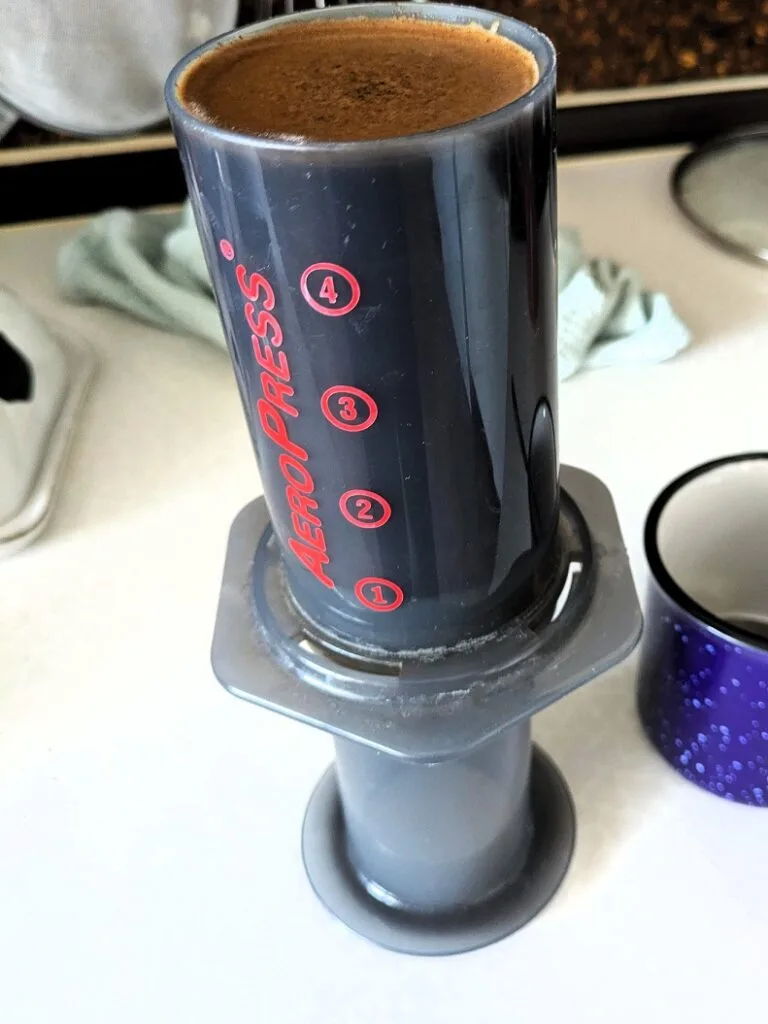
Image source: Bing (Web (fair-use with source credit))
Branch C: You Have a Moka Pot
The Moka pot is the classic stovetop option. It makes strong coffee, but it's not espresso. The pressure is lower, and the brew runs hotter, which can extract bitter compounds.
What you need:
- Moka pot (any size, 3-cup or 6-cup recommended)
- Medium-fine grind coffee
- Cold water for the base
- Tall glass
- Ice
- Cold water
The workflow:
- Fill the Moka pot base with cold water to just below the safety valve.
- Fill the filter basket with coffee, level it off without tamping.
- Screw the top on tightly.
- Place on medium heat.
- As soon as the coffee starts flowing, watch it closely.
- Remove from heat immediately when you hear a sputtering sound.
- Pour the hot brew into a separate cup. Let it cool for 30 seconds.
- Fill your glass with ice and add 4 ounces of cold water.
- Pour the Moka pot brew over the ice.
Why this matters: Not cooling the brew leads to excessive melting and bitterness.
The most common mistake: Letting the Moka pot run until it sputters on heat for too long. That last bit of brew is over-extracted and bitter. Remove it early, and pour the entire brew from the top chamber.
Use a top chamber that doesn't drip.
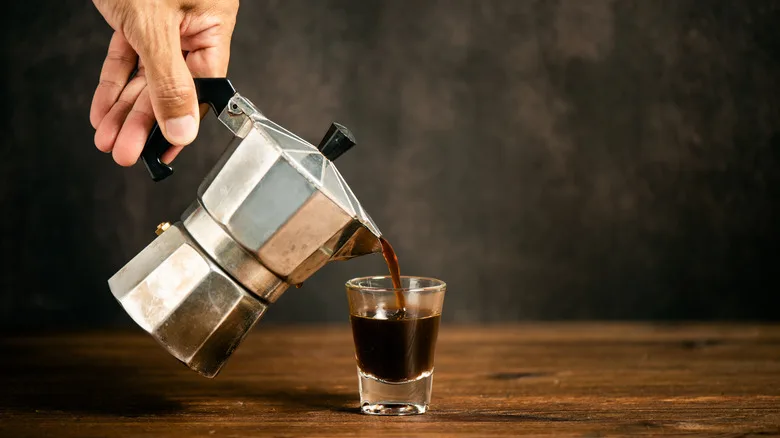
Image source: Bing (Web (fair-use with source credit))
Branch D: You Have Instant Espresso Powder Only
This is the fastest method, and it actually works better than instant coffee. You just need to know the trick to avoid clumps.
What you need:
- Instant espresso powder (brands like Café Bustelo or Medaglia d'Oro)
- Hot water (about 2 ounces)
- Cold water (about 4 ounces)
- Glass
- Ice
The workflow:
- Boil 2 ounces of water.
- Add 2 teaspoons of instant espresso powder to the hot water.
- Stir until fully dissolved. No clumps allowed.
- Fill your glass with ice.
- Pour the 4 ounces of cold water over the ice.
- Add the dissolved espresso concentrate.
- Stir well.
Why this method works: Dissolving the powder in a small amount of hot water creates a concentrate similar to espresso. If you add the powder directly to cold water, it clumps and tastes grainy.
The most common mistake: Not using enough powder. Instant espresso is weaker than real espresso. You need 2 teaspoons per drink.
One teaspoon makes a weak, watery americano.
Who this is for: Anyone with a kettle, a mug, and 90 seconds. It's not the same as a real espresso shot, but it's close enough for a quick fix.
Common Mistakes That Make It Watery or Bitter
You followed the steps exactly. It still tasted off. What happened?
Let's run through the three most common failures and fix them now.
Mistake 1: Overfilling with water.
The glass looks empty with just ice and a tiny shot. So you keep pouring water until it looks like a normal drink. That extra water dilutes the espresso into something closer to brown water.
Stick to the 2-to-4 ratio. A tall glass of ice weighs about 120 grams. Fill the glass, add 4 ounces of water, and no more.
Mistake 2: Using ice that melts too fast.
Small cubes or crushed ice melt fast. Your drink turns watery within three minutes. Large cubes or sphere ice melt slower.
Verified buyer feedback shows that replacing standard ice with large-diameter cubes extends drink quality by about five minutes. If your americano tastes weak halfway through, check your ice size.
Mistake 3: Over-extracting the coffee base.
With a Moka pot, letting it hiss on the stove for too long pulls bitter compounds. With an Aeropress, steeping longer than 90 seconds adds harshness. With instant, using water hotter than 205°F scorches the powder.
The solution is simple. Respect the timings in each branch above. If it tastes burnt, reduce heat or steep time.
A special note on dilution. The ice itself is water. If you use 8 ounces of ice and add 4 ounces of liquid water, the total water once the ice melts is closer to 12 ounces. Your ratio breaks.
That is why the standard method calls for 4 ounces of water and enough ice to fill the glass. The ice finishes the rest.
Real-World Preferences: When to Pick Method A Over Method B
Not every method fits every situation. Here is how to decide which one you should actually use today.
You should use the espresso machine method if you value speed and authenticity above all else. It takes 60 seconds, and the drink is as close to a cafe americano as you will get at home. The downside is obvious.
You need the machine.
You should use the Aeropress method if you want the best espresso-like concentrate without buying an espresso machine. It produces a clean, bright cup with minimal sediment. It is also portable.
You can even use it in a hotel room with a kettle. The tradeoff is cleanup. The Aeropress has multiple parts to wash.
You should use the Moka pot method if you already own one and do not want to buy new gear. It makes a strong, bold brew. But it runs hotter and extracts more bitterness unless you remove it from heat early.
It is also slower. The whole process takes about 6 minutes.
You should use instant espresso powder if you value convenience above flavor. It takes 90 seconds and requires nothing but a kettle. It will never taste exactly like real espresso, but it gets close enough for a quick fix.
Our research shows that many people actually prefer instant espresso powder for their morning iced americano because it removes all guesswork.
One more factor. If you prioritize caffeine content, the espresso machine and Aeropress both deliver about 120 to 150 mg per double shot. Instant powder varies by brand but generally provides 60 to 80 mg per teaspoon. You would need 3 teaspoons to match a double shot.
| Method | Time | Flavor Quality | Cleanup | Caffeine (mg) |
|---|---|---|---|---|
| Espresso machine | 60 sec | Excellent | Easy | 120-150 |
| Aeropress | 2-3 min | Very good | Moderate | 120-150 |
| Moka pot | 6 min | Good (watch for bitterness) | Easy | 100-130 |
| Instant powder | 90 sec | Decent | Minimal | 60-80 per tsp |
If you are still debating, think about your morning. If you have 90 seconds and a kettle, use instant. If you have 3 minutes and want the closest thing to real espresso without the machine, get an Aeropress.
And if you are shopping for a machine that does the work for you, our tear-down of some top-rated brewers can help narrow it down.
FAQs – Quick Fixes for Your Specific Situation
Can I use regular instant coffee instead of instant espresso powder?
You can, but the flavor will be weaker and more sour. Instant espresso powder is roasted darker and ground finer. It dissolves better and tastes closer to real espresso.
If you only have regular instant, use 3 teaspoons instead of 2.
Why does my iced americano taste sour?
Sourness means underextraction. Your espresso shot ran too fast, or your water was not hot enough. With an Aeropress, steep for a full 60 seconds.
With a Moka pot, use medium heat, not low. With instant powder, stir until fully dissolved. No clumps means no sour pockets.
Why does my iced americano taste burnt?
Bitterness means overextraction. Your water was too hot, or you let the brew run too long. With a Moka pot, remove it from heat at the first sputter.
With an Aeropress, lower your water temperature by 10 degrees. Instant powder should only receive 200°F water, not boiling.
Can I make an iced americano in advance and store it?
Not really. Ice melts, and the drink loses its character within 20 minutes. If you want a batch drink, make cold brew instead.
Cold brew keeps in the fridge for up to two weeks. But that is a different drink entirely. For the full comparison, our guide to common pitcher cold brew problems covers what goes wrong when you try to scale up.
Is an iced americano healthier than an iced latte?
Yes. An americano is just espresso and water. A latte adds milk.
That means the americano has zero fat, zero sugar, and about 5 calories per serving. If you are watching calories or avoiding dairy, the americano wins every time.
What if I want a sweeter iced americano without ruining the taste?
Add a pinch of salt to the espresso before pouring over ice. Salt suppresses bitterness and enhances natural sweetness without adding sugar. Or use a dash of vanilla extract in the water.
Simple syrup works too, but go light. One teaspoon is plenty.

“I’m Jackson, a coffee enthusiast and the founder of CofeBrew. I specialize in testing home brewing equipment and creating easy-to-follow recipes to help you brew the perfect cup every morning.”