
You simply want a cup of coffee to get you going in the morning. But wait, you see your Bunn coffee maker leaking water on the counter! My own machine cried like this once, but it taught me exactly how to fix leaking bunn coffee maker fast. I will show you simple Bunn coffee maker leak fix steps to save your morning. Let’s fix that drip right now so you can sip in peace!
Identify the Source of the Leak
Before you grab your tools, look very closely at the machine. You must find out where the water drips first. Fixing a leaking Bunn coffee maker depends entirely on where the water pools. I learned this years ago. I took my whole coffee pot apart just for a small top leak!
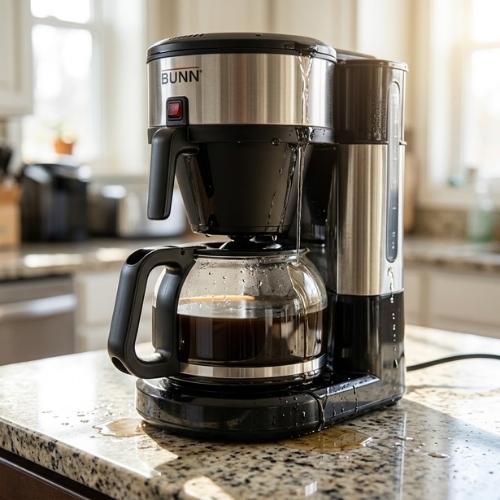
Over-flowing from the Brew Basket
Is your Bunn coffee maker leaking when brewing right over the glass pot? To fix a brew basket leak, you must clean the clogged spray head and use tall filters. This is a very common Bunn coffee maker drip problem. The water just backs up too fast and spills over the top rim.
Bunn Coffee Maker Leaking From Bottom or Sides
You might find a huge wet puddle flat on your kitchen counter. A Bunn coffee maker leaking from bottom or sides means a bad internal seal. Water pooling underneath typically points to a torn silicone gasket or a loose hose. You will need a basic Bunn coffee maker water leak repair for this step. Do not worry, it is easy to fix!
Leaking from the Back (After Pouring)
Does the water spill out right after you pour it in the top? A back leak right after pouring points to a badly seated tank or a cracked plastic tank. If the internal plastic is cracked, learning how to fix a bunn coffee maker that leaks is tough. Let’s find your exact leak spot so we can stop the mess fast.
Quick Fixes to Stop a Bunn Coffee Maker From Leaking (No Disassembly)
Let us start with the easy stuff first. Nobody wants to take a machine apart if they do not have to! To figure out how to stop Bunn coffee maker from leaking, try basic cleaning tricks. I always try these quick steps before I grab my toolbox.
Clean the Spray Head
To fix a clogged spray head, unscrew the round nozzle above the brew basket and clear the small holes with a pin. Hard water is a sneaky enemy in the kitchen. It blocks the tiny holes where the hot water sprays out. Use a sharp sewing pin or the official Bunn tool to scrape off the white mineral crust. I do this quick chore once a month to keep my machine happy and drip-free.
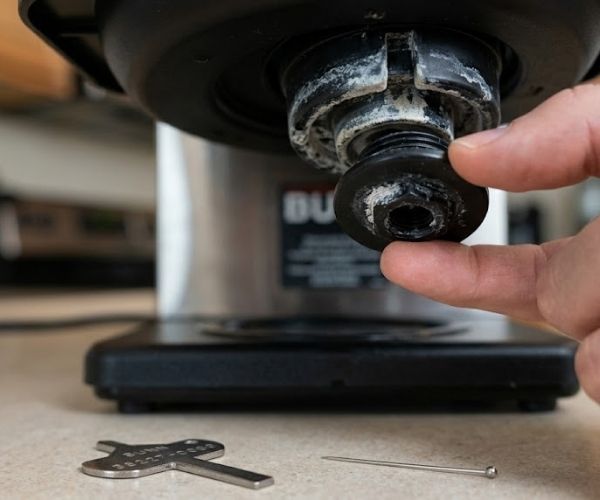
Check Your Coffee Filters
Using the wrong paper filters can cause water to overflow, making it look like the Bunn coffee maker is leaking when brewing. These special machines brew coffee very fast. A huge rush of water hits the coffee grounds all at once. If you use normal, short filters, the water backs up and spills over the sides. Buy the taller Bunn filters to stop this fake leak fast.
Descale the Unit Regularly
To descale your coffee maker, combine one cup of white vinegar and two cups of water and run the whole brew cycle. Lime buildup acts like a bad traffic jam inside your machine’s pipes. This hard blockage creates high pressure that forces water out of the internal seals. You do not need expensive chemicals for this simple fix. My easy vinegar wash clears the pipes and stops those annoying drips right away.
Intermediate Bunn Coffee Maker Water Leak Repair (Disassembly Required)
Cleaning the outside is not always enough. You must open the machine to fix parts inside. Do not worry at all! You can do this. I felt scared my first time doing a Bunn coffee maker water leak repair. But if you take it slow, it is quite fun. Let us look inside together.
Important: Always unplug the machine and drain it dry before you open it for any Bunn coffee maker water leak repair.
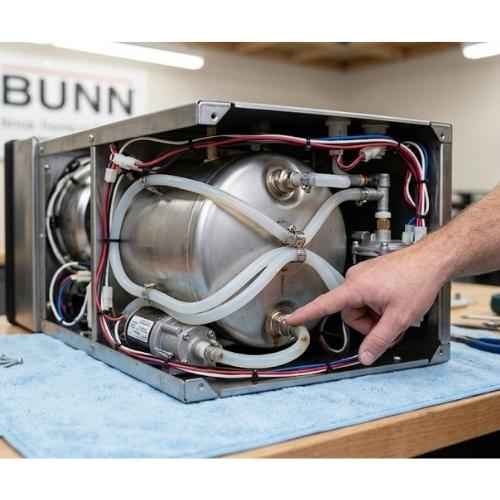
Inspect and Tighten Internal Hoses
How do you check the hoses inside? Flip the empty machine over. Take out the screws on the bottom plate. Now you can see the tubes. Look at where the tubes meet the metal tank. Heat makes these rubber tubes hard over time. If a hose feels loose, push it on hard. Pinch the metal clip tight.
What if the end of the hose is split? You can fix a torn hose by cutting off the bad tip. Slide the fresh end back on the tank. I saved big money with this quick trick! Just snip the bad tip off with good scissors. Put the metal clip back on. Your leak is gone!
Reseal or Replace the Tank Gasket
How do you fix a leaky heating tank seal? Look at the base of the tank. If water pools there, you need a new rubber ring. Big commercial machines are very easy to fix. You can buy the exact part online. Just look for the Bunn 05221.0000 ring. Put the new ring in place of the old one.
Home units like the Speed Brew are not the same. Bunn does not sell those exact seals to home users. But figuring out how to fix my leaking bunn coffee maker is still easy! You can buy a plain O-ring from a local hardware store. Or, you can use safe, food-grade silicone caulk. Put a very thin line of it right around the old seal. This stops the leak fast.
When to Replace Your Machine Instead of Repairing It
When is a fix for a Bunn coffee maker leak a bad plan? You can not fix a cracked tank in a home pot. The brand melts these hard parts as one piece. No safe glue will hold back the hot water.
I felt sad when my old pot broke. A deep crack meant my Bunn coffee maker leaking from bottom was dead. Now and then you just say bye to a friend. A fresh pot gives you a safe cup of joy.
Additional Troubleshooting Tips
Verify Water Temperature and Pressure
Your pot can get too hot. High heat makes your Bunn coffee maker leak. Boiling water pushes hard on the pipes inside.
You must check the heat switch on your machine. Set it to a low or safe mark. This calm setting stops the bad leak fast.
” This video shows a real-world example of diagnosing and fixing a leaking Bunn coffee maker.”
Regular Maintenance
How do you stop new drips? Clean parts stop your coffee maker from leaking later. I wash my own pot each month.
Hard scale builds up fast and clogs the tubes. A quick wash keeps all the parts clear. This small chore gives you great coffee for years.
Conclusion
Fixing your pot is a great way to save your day. Start by finding the leak spot. Try quick cleaning first. If that fails, look at the hoses and seals inside. These simple steps stop your coffee maker from leaking and keep your kitchen dry.
I hope this guide helps you get back to your morning cup. You can do this! If you have a fix that worked for you, please tell me below. I love to hear your coffee stories and tips!
FAQs about on how to fix leaking bunn coffee maker
Why is my Bunn coffee maker leaking water from the bottom?
A Bunn coffee maker leaking water from the bottom usually has a worn seal or loose hose. Heat and minerals weaken parts, letting water escape underneath the unit.
Can I use silicone sealant to fix a Bunn coffee maker leak?
You can use food-safe silicone as a short-term fix for a Bunn coffee maker leak. It may slow dripping, but replacing the gasket is safer and works better long term.
How long should a Bunn coffee maker last before leaking?
Most Bunn coffee makers last 5 to 10 years before leaks start. Leaks appear sooner without cleaning or descaling, especially in areas with hard water buildup.
Is it safe to keep using a leaking Bunn coffee maker?
It is not safe to keep using a leaking Bunn coffee maker. Water near wires can cause shocks or outlet trips, so stop using it until the leak is fixed.
What is the most common cause of Bunn coffee maker leaks?
The most common cause of Bunn coffee maker leaks is mineral buildup damaging seals. Clogged spray heads and loose internal hoses also cause dripping and pooling water.
Related Post:
- How to Use a Keurig Machine
- How to clean a coffee maker without vinegar
- How to Fix Leaking Bunn Coffee Maker
- how to unlock hopper on breville coffee maker
- how to clean my braun coffee maker
- how to fix krups coffee maker
- how to clean krups 12 cup coffee maker

“I’m Jackson, a coffee enthusiast and the founder of CofeBrew. I specialize in testing home brewing equipment and creating easy-to-follow recipes to help you brew the perfect cup every morning.”