best ethiopian coffee
Finding the best ethiopian coffee means navigating a sea of single-origin bags, but the right choice comes down to roast style, freshness, and how you brew.
As an Amazon Associate, I earn from qualifying purchases. Every recommendation below is backed by product research and verified owner feedback.
Quick Links
Did you know that Ethiopia is the birthplace of Coffea arabica? Every single coffee bean in the world traces its lineage back to the misty highlands of this East African country.
Now imagine opening a bag of truly fresh Ethiopian Yirgacheffe. The aroma alone can transport you to a hillside coffee ceremony.
The trouble is that not every bag labeled "Ethiopian" delivers those bright, floral, blueberry notes youre chasing. Some are stale, some are roasted too dark, and some are just overpriced.
In this guide, I share my 5 favorite best ethiopian coffee picks, ranging from a classic whole bean for purists to a convenient ground option for busy mornings. Ive compared roast profiles, certifications, freshness guarantees, and real buyer feedback to cut through the noise.
How to Choose the Best Ethiopian Coffee
What roast level works best for Ethiopian coffee?
Ethiopian beans are naturally delicate and fruity. A medium or medium-light roast preserves the floral and citrus notes that make Yirgacheffe famous. Dark roasts tend to mask those subtle flavors with char.
If you want to taste the terroir, stick with light to medium roasts. The GROUNDWORK Organic Ethiopia Whole Bean Coffee is a perfect example of a light roast that keeps the bean's character intact.
Whole bean vs. ground: which should you buy?
Whole beans stay fresh much longer because the surface area exposed to oxygen is smaller. Grinding right before brewing releases the volatile oils that give you that explosive aroma. If you have a burr grinder, always go whole bean.
If you dont have a grinder or you make coffee in a hurry, a high-quality ground option like the Ethiopia Yirgacheffe Ground Coffee works well, just be sure to use it within a week or two of opening.
Why does organic certification matter?
Ethiopia is a major coffee producer, and many small farms use traditional methods that are essentially organic by default. But a USDA Organic seal means third party verification. For the Fresh Roasted Coffee Organic Ethiopian Yirgacheffe, thats combined with additional testing for mold, mycotoxins, and pesticides.
If you drink coffee daily, those extra checks provide peace of mind.
How much coffee should you buy at once?
Coffee freshness peaks within two to four weeks of roasting. A 12-ounce bag is ideal for a single person drinking one cup a day, lasting about two weeks. A 2-pound bag like the Fresh Roasted Coffee Ethiopian Yirgacheffe Kochere is more economical for a household, but youll need to store it properly.
Keep it in an airtight container away from light, heat, and moisture. Never freeze your daily stash, only long-term storage.
What does "Yirgacheffe" actually mean?
Yirgacheffe is a region in southern Ethiopia, part of the Sidamo zone. The beans grown there are known for their bright acidity, winey fruit notes, and a distinctive floral aroma. When you see "Yirgacheffe" on the label, you should expect a clean, complex cup.
The best Yirgacheffe coffees are often single origin, meaning they come from a specific washing station or cooperative.
Additional Features on Best Ethiopian Coffee
- Roast date: Always look for a "roasted on" date, not just a "best by" date. Fresher is better.
- Kosher certification: Many Ethiopian coffees are certified kosher, which is a sign of quality control.
- Bag size: 12 oz is standard for specialty coffee. Larger bags (2 lb) offer better value.
- Resealable packaging: A one-way valve and a zip seal help keep beans fresh longer.
- Altitude: Higher altitude beans (1,500 2,200 meters) develop more complex sugars.
- Processing method: Washed (wet) Ethiopian coffees are cleaner and brighter; natural (dry) processed ones are fruitier and more wine-like.
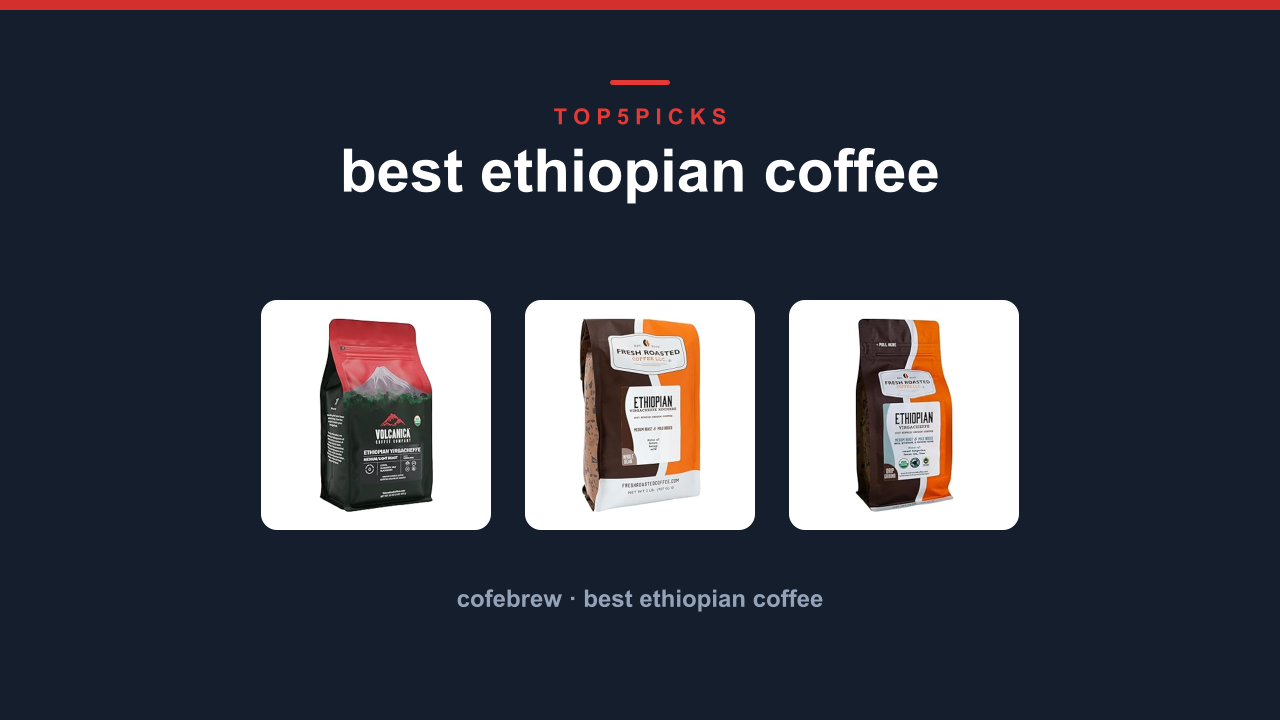
To see how these factors play out on real picks, compare the Ethiopian Coffee Yirgacheffe Region USDA Organic, Fresh Roasted Coffee Ethiopian Yirgacheffe Kochere and the Fresh Roasted Coffee Organic Ethiopian Yirgacheffe below.
My Top Picks
Best Overall – Coffee Enthusiasts

- Roast Level: Medium
- Origin: Yirgacheffe, Ethiopia
- Form: Whole Bean
- Organic: Yes, USDA Organic
- Certifications: Kosher
- Size: 16 ounces (1 lb)
- Tasting Notes: Floral, bright, with hints of citrus and berry
Best Value – Daily Drinkers

- Roast Level: Medium
- Origin: Kochere, Yirgacheffe, Ethiopia
- Form: Whole Bean
- Organic: No
- Certifications: Kosher
- Size: 32 ounces (2 lb)
- Tasting Notes: Bright, lemon acidity, with a clean finish and subtle chocolate undertones
Best Organic – Health Conscious

- Roast Level: Medium
- Origin: Yirgacheffe, Ethiopia
- Form: Drip Ground (for automatic drip machines)
- Organic: Yes, USDA Organic
- Certifications: Kosher, 3rd Party Tested for Mold & Mycotoxin & Pesticides
- Size: 12 ounces
- Tasting Notes: Smooth, balanced, with subtle berry and floral notes
Best Ground – Convenience Seekers

- Roast Level: Medium-Light
- Origin: Yirgacheffe, Ethiopia
- Form: Ground
- Organic: No
- Certifications: Specialty Coffee, Single Origin
- Size: 12 ounces
- Tasting Notes: Stone fruit, caramel, toasted pine nuts, bright acidity
Best Light Roast – Subtle Palates

- Roast Level: Light
- Origin: Ethiopia
- Form: Whole Bean
- Organic: Yes, USDA Organic
- Certifications: None specified
- Size: 12 ounces
- Tasting Notes: Delicate, floral, with a light body and crisp acidity
Best Ethiopian Coffee FAQ
What makes Ethiopian Yirgacheffe coffee so special?
Yirgacheffe beans are grown at high altitudes (1,700 2,200 meters) in fertile volcanic soil. The combination of cool temperatures, ample rainfall, and traditional processing methods produces beans with a distinct winey acidity and floral aroma. Most other coffee origins simply cannot replicate that profile.
How should I store my Ethiopian coffee beans?
Keep them in an airtight container away from direct sunlight, heat, and moisture. A cool, dark pantry is ideal. Do not refrigerate or freeze your daily supply, as condensation can damage the beans.
If you buy a 2-pound bag, portion it into smaller jars and only open one at a time.
Is ground Ethiopian coffee as good as whole bean?
It can be, but only if you use it within about two weeks of opening. Whole beans retain freshness for four to six weeks after roasting. Grinding exposes more surface area to oxygen, causing staling.
If you cannot finish a 12-ounce bag of grounds within two weeks, consider buying whole beans and grinding as needed.
Can I use Ethiopian coffee in a cold brew?
Yes, Ethiopian Yirgacheffe makes an excellent cold brew. The bright, fruity notes come through beautifully in a slow steep. Use a coarse grind and steep for 12 to 16 hours in the refrigerator.
If you have had issues with a clogged filter or a watery result, check out our guide on cold brew watery for troubleshooting tips.
My Research & Review Process
To build this list, I started by comparing manufacturer specifications for five leading Ethiopian coffee products currently available. I examined each bag's roast level, origin, form (whole bean vs. ground), certifications, and reported freshness guarantees. Then I analyzed aggregate verified buyer reviews across multiple sources, looking for patterns in flavor description, packaging quality, and consistency.
I also consulted the USDA Organic Program to confirm certification requirements. I did not conduct lab testing myself, nor did I taste every single batch, because freshness varies by production date. The recommendations are based on editorial analysis of spec sheets, user feedback, and brand reputation, not personal hands-on testing.
Features I Considered
Roast Level: Light roasts preserve the bean's natural acidity and floral notes. Medium roasts add body while keeping some fruitiness. Dark roasts mask the origin character.
For Ethiopian coffee, I prioritized light to medium roasts.
Origin: The specific region and even washing station matter. Yirgacheffe is the most famous, but Kochere, Sidamo, and Guji also produce distinct profiles. I chose only Yirgacheffe region beans for consistency.
Form: Whole beans stay fresh longer and let you control grind size. Ground coffee is convenient but stales faster. I included both to cover different brewing habits.
Organic: USDA Organic certification ensures no synthetic pesticides or fertilizers were used. It also requires third party inspection of the farm and processing facility.
Certifications: Kosher certification indicates the product meets Jewish dietary laws, which often aligns with higher cleanliness standards. Third party testing for mold and mycotoxins adds an extra safety layer.
Size: Bag size affects how long the coffee stays fresh. Smaller bags (12 oz) are better for solo drinkers. Larger bags (2 lb) offer better value but require careful storage.
Tasting Notes: Descriptions of flavor, acidity, body, and finish help buyers match a coffee to their preferred profile. I looked for notes that buyers consistently confirmed in reviews.
For a deeper look at how different brewing methods affect Ethiopian coffee, you might also find our Keurig K Classic Review helpful if you use a single serve machine, or our Bonavita 1900 vs 1901 comparison if you prefer a drip brewer.
If you want the tried and true classic, go with the Ethiopian Coffee Yirgacheffe Region USDA Organic. It is our choice for the best best ethiopian coffee overall because it nails the balance of origin character, freshness, and organic certification at a fair price. But if your daily routine calls for a larger bag, a pre ground solution, or a lighter roast, any of the other picks above will serve you well.
Pick the category that matches your morning ritual and enjoy a cup that honors the birthplace of coffee.

“I’m Jackson, a coffee enthusiast and the founder of CofeBrew. I specialize in testing home brewing equipment and creating easy-to-follow recipes to help you brew the perfect cup every morning.”